
Running Gait Analysis in NYC
Advanced gait analysis for runners to identify biomechanical inefficiencies, reduce injury risk, and improve running efficiency.
How a Gait Analysis Can Help
If you’re like most runners, you were never formally taught how to run. Over time, runners develop movement patterns and habits that may not be the most efficient and this can explain why over 50% of runners sustain an injury each year!
That’s where gait analysis for runners in NYC comes in.
Our team of certified running coaches, who are also Doctors of Physical Therapy, are uniquely positioned to evaluate your biomechanics and help you run smarter, not harder. With a professional running gait analysis in NYC, we identify inefficiencies, imbalances, and risky movement patterns that could lead to an injury or poor performance as well as implementing gait modifications that allow you to continue running.
Whether you are a competitive or recreational runner, our advanced gait analysis program for runners can make a significant difference in how you run and how you feel.
What Our Clients Think
“I’m a runner and they got me marathon ready. Beautiful personalities and awesome work.”
(5 Star Google Review)
– Michelle H
Running Analysis for Active New Yorkers
Your gait refers to how you move your limbs in space to achieve locomotion – or more simply put, how you walk or run. A gait analysis enables us to identify any biomechanical inefficiencies in your gait cycle instead which starts when one foot makes contact with the ground, and ends when that same foot makes contact with the ground again. Running may seem simple but it’s actually very complex with each runner’s gait pattern being unique to themselves. In fact your running gait is so unique it is likened to our fingerprints. No one step that you take will ever be the same.
A one-size-fits-all approach to resolving running issues may work for learning best general principles, but our bodies and running style is unique, and these subtle variations have significant implications on how to improve your running or eliminate your pain. While there are many reasons why gait patterns differ amongst us there are still core components that can be measured and evaluated to provide guidance on determining rehabilitation treatment and/or improvement in your running performance.
A gait analysis is not exclusively for elite-runners, and most people seeking a gait analysis here in New York City are actually recreational runners. Runner’s seek gait analysis for injury prevention, to learn the origin of an existing injury or to improve their running efficiency and performance (simply put to run faster!). If a runner is exhibiting an abnormal gait pattern, by analyzing their gait we can pinpoint the biomechanical cause and provide guidance on how to correct for inefficiencies in your gait to aid in rehabilitation, prevent injury recurrence or have you running faster than ever.
Benefits of Gait Analysis for Runners
A professional running gait analysis provides far more than a visual review of how you run. It delivers actionable insights that improve performance, reduce injury risk, and optimize long-term running health.
1. Identifies Hidden Biomechanical Faults
2. Reduce Risk of Overuse Injuries
3. Reduces Compensatory Stress
4. Improves Running Efficiency
5. Enhances Performance
6. Supports Targeted Rehabilitation
What Does the Gait Analysis Process Include?
Our four-step gait analysis for runners in New York City provides a comprehensive evaluation of your running mechanics and performance.
Detailed Running History
We start by learning about you — your training routine, goals, injury history, medical background, and footwear. This information helps us customize recommendations specific to your needs.
Physical Assessment
We perform targeted tests to identify asymmetries, strength deficits, mobility restrictions, and stability limitations that may affect your running efficiency or increase injury risk.
Motion & Video Analysis
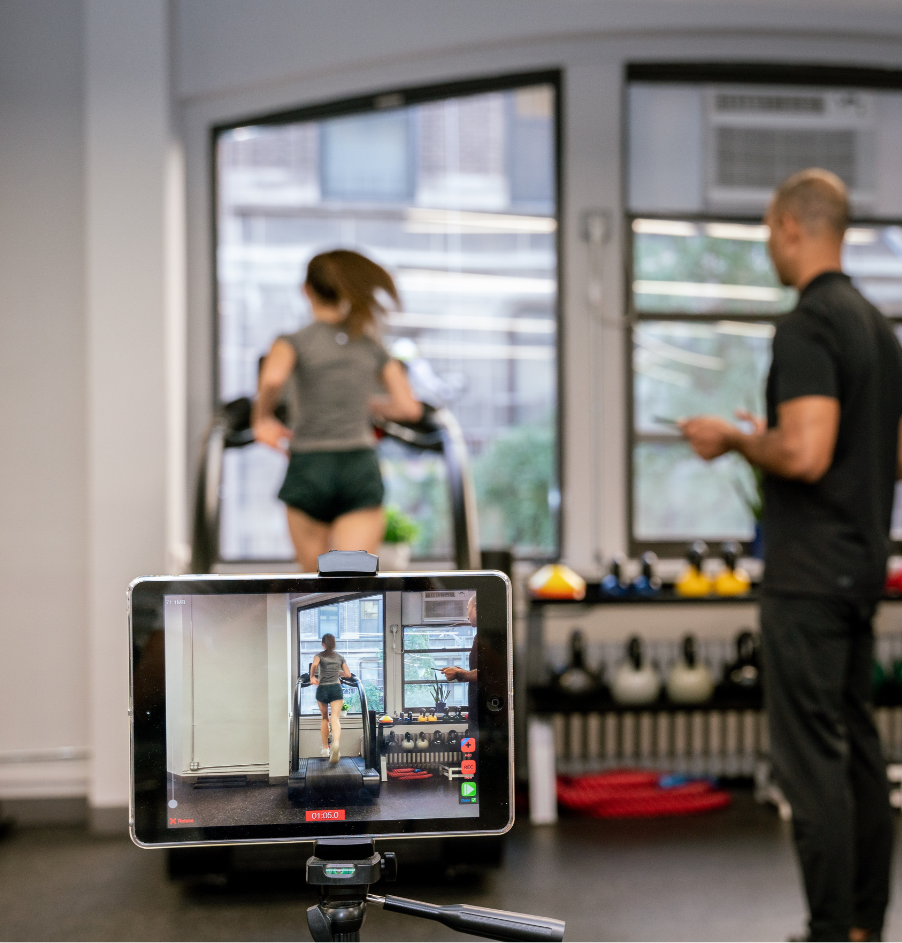
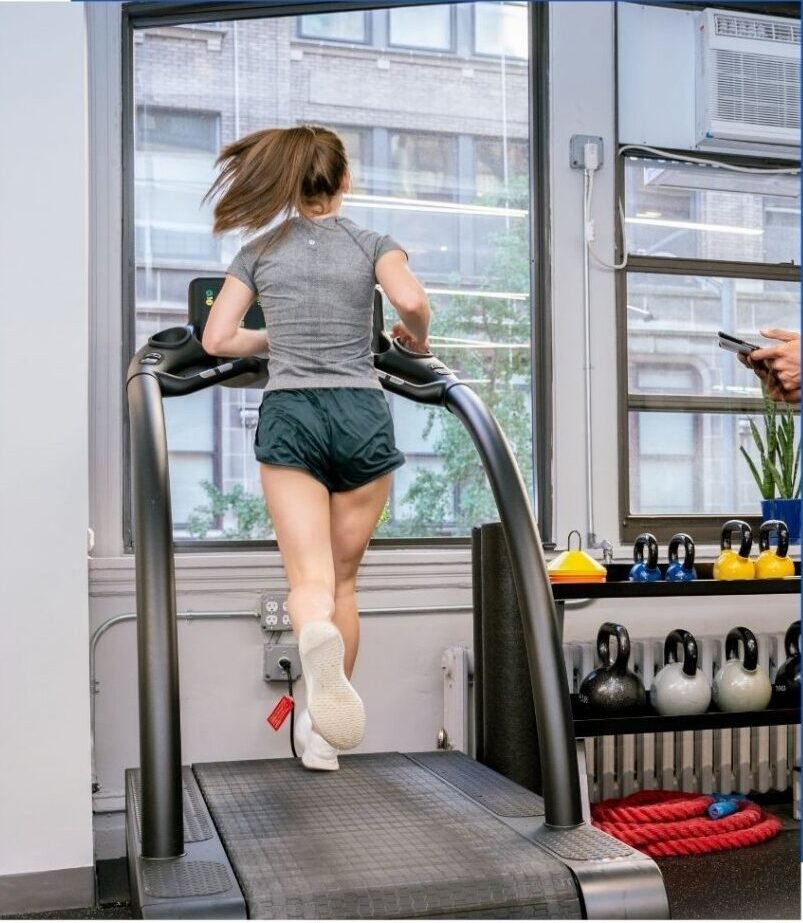
You’ll run on a treadmill while we capture high-speed video from multiple angles, along with data from DorsaVi wearable motion sensors. We assess:
- Joint angles throughout the gait cycle
- Cadence
- Ground reaction forces
- Initial peak acceleration (impact force)
- Stance time
We may also analyze your gait at different speeds to evaluate how your mechanics change with increased demand.
Detailed Findings & Recommendations
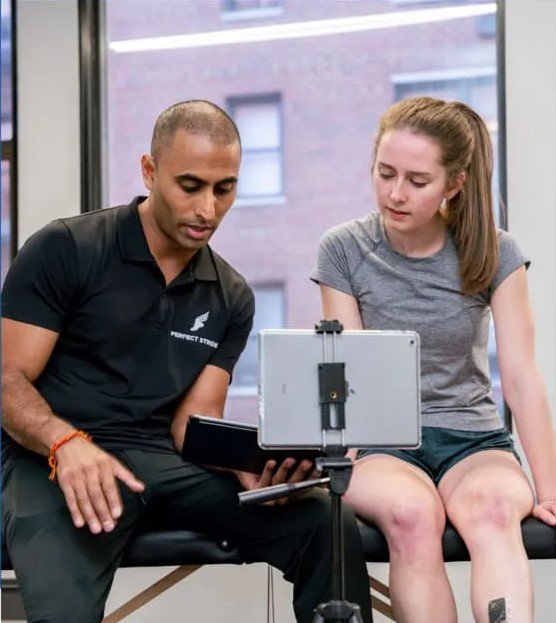
Using frame-by-frame analysis, we evaluate joint movement, muscle control, and identify gait deviations contributing to pain or inefficiency.
You’ll receive:
- A clear explanation of findings
- Strategies to reduce stress on injured areas
- Footwear guidance
- Gait retraining recommendations
- Physical therapy recommendations if needed
THE MOST COMMON ISSUES REVEALED BY A GAIT ANALYSIS FOR RUNNERS
Location
Strength
Slow Cadence
Longer strides at lower frequency can reduce running efficiency and increase loading rates.
Running Gait Analysis NYC Frequently Asked Questions
Your gait analysis will start with a discussion about your running history, training, footwear and goals. Then we get you set up with our DorsaVi wearable sensors. This is how we will be able to gather a lot of powerful data about your running such as: ground reaction forces, ground contact times, initial peak acceleration forces, cadence and more. Once we get you up and running on our state of the art Woodway treadmill, we will take video footage of you from multiple angles while data from the DorsaVi sensors is being gathered at the same time. After we have collected everything we need we will sit down and discuss our findings with you and formulate the best gameplan for you moving forwards.
Not at all! Many runners use gait analysis proactively to improve form, efficiency, and reduce injury risk.
Yes. You’ll get a report outlining key findings and a personalized program to correct any imbalances or inefficiencies.
We’ll evaluate your movement patterns, collect video footage and data from our wearable motion sensors, and assess relevant strength or mobility deficits.
A full gait analysis typically takes about 55 minutes. This includes assessment, review, and delivery of a custom plan. Follow-up sessions may be recommended based on your goals and needs.
While most stores offer basic video assessments to fit shoes, Perfect Stride PT provides clinical-grade, sensor based and movement-focused evaluations led by licensed physical therapists and running specialists who really understand running. We analyze biomechanics, forces acting on your body, stride length, cadence, and more to deliver a personalized performance and injury risk reduction plan.