
Running For Life
Gain The Confidence To Work With Runners, Speak Their Language and Get Them To Performing At Their Best
Running For Life
Most clinicians and coaches don’t struggle from a lack of information, they struggle to apply it.
Running for Life– Performance is a comprehensive weekend course that provides a structured, repeatable system for confidently understanding and guiding runners. By focusing on how training actually works, you’ll learn to make better decisions and keep runners healthy and consistent. You won’t just understand running better, you’ll become the coach or clinician runners trust to guide them from injury to peak performance.

Course Overview
Running injuries are complex and rarely caused by a single issue. Most stem from a combination of movement inefficiencies, training errors, tissue capacity limitations, and an overall lack of understanding on how to train appropriately. Running for Life is a hands-on, clinically driven continuing education course designed to help professionals confidently understand the demands of running and get runners to peak performance.
This course bridges the gap between traditional rehabilitation models, running performance and the real-world demands of running. The course is led by Doctors of Physical Therapy who are Board-Certified Orthopedic Clinical Specialists, and certified running coaches. This course will help you understand the demands of running from both a clinical and coaching perspective.
Attendees will leave with clear frameworks, practical assessment strategies, and actionable return-to-run progressions that can be immediately applied in clinical or performance settings.
Why Take This Course?
Perfect Stride Physical Therapy is known for its performance-based, runner-focused approach to rehabilitation and training. Our clinicians work daily with runners ranging from recreational athletes to competitive performers, combining rehab, biomechanics, and performance under one roof. We want to share everything that we have learned with you, including our mistakes, so you don’t have to make them yourself.
This course reflects the same approach we use in practice:
- Evidence-informed
- Movement-driven
- Performance-focused
- Clinically-guided

The Revolving Door of Running Injuries: Rethinking Prevention and Management
The annual injury rate among runners is substantial, though figures vary across studies depending on the definition of “injury.” Most research indicates that between 30% and 80% of all runners will sustain an injury in any given year. Some estimates suggest that at any one time, about 25% of runners are currently injured. The vast majority of these are overuse injuries, caused by the repetitive stress and impact of running, rather than traumatic events like falls.
As these statistics demonstrate, the high incidence of running-related injuries translates to a significant and consistent portion of the patients who will walk through your clinic or gym doors. However, there is clearly a large deficiency in our understanding of endurance running. This is where Running for Life comes into the equation. Designed to leave you with the know-how and confidence to better manage the endurance runner and help play a part in decreasing the prevalence of running-related injuries. Developing a specialized skill set in this area is therefore not just an enhancement of your practice, it’s an essential tool for effectively managing a large and motivated patient demographic seeking to stay running for life.
See What Coaches and Clinicians are Saying About Running For Life
“The Running for Life Course was a tremendous asset to our physical therapy clinic when it comes to understanding, training and treating the endurance running athlete. This course was engaging, practical and heavily research supported. The teaching style and approach made it easy to understand how to build effective programs for endurance athletes. This course has better equipped our team to have more in depth conversations about programming, training and the recovery needs for the endurance athlete.”
— Patrick Suarez
DPT, OCS, SCS Clinic Owner – Suarez Sport & Orthopedic Physical Therapy
A Practical Weekend Course for Clinicians Working with Runners
Schedule
Day 1
- 9:00am – 10:30am – The Running Athlete – Considerations when working with the running athlete (runner’s identity, best practices); – What is Running? What is needed to run – Foot strike patterns and their significance
- 10:30am -10:45am – BREAK
- 10:45am -12:15pm – Return to Running – Progression through a 5 stage model, introducing speedwork, training load monitoring
- 12:15pm – 1:15pm – LUNCH
- 1:15pm – 3:15pm – Basics of programming the runner – Breakout to Follow (create a marathon training program for an example runner)
- 3:15pm – 3:30pm – BREAK
- 3:30pm – 4:30pm – Footwear Considerations – Types of shoes, “super” shoes, shoe spectrum, minimalist footwears role
- 4:30pm – 5:00pm – Review/Questions
Day 2
- 9:00am – 9:30am – Review of Day 1
- 9:30am – 10:00am – Footwear continued
- 10:00 – 10:15am – BREAK
- 10:15am -12:30pm – Strength Training for Runners – Research backed basics of programming the runner. Breakout to Follow – Create a strength training program & program it along with previously created run training plan
- 12:30pm – 1:30pm – LUNCH
- 1:30pm – 2:00pm – Strength Training for Runners – Continued
- 2:00pm – 2:45pm – Treadmill versus Overground Running – What are the differences? Considerations for running/rehab
- 2:45pm – 3:15pm – Nutrition – Research Guidelines
- 3:15pm – 3:30pm – BREAK
- 3:30pm – 5:00pm – Review & Questions
Running For Life Has Been Over a Decade in The Making.
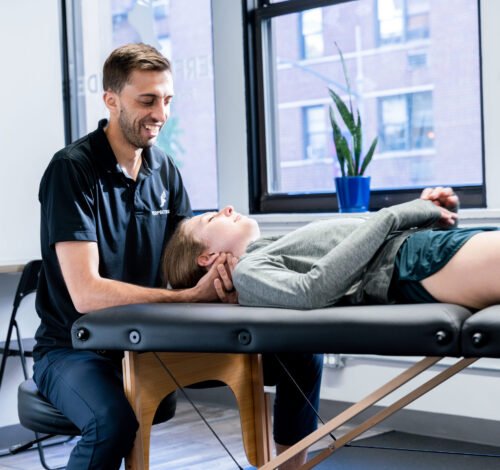
It began in 2012, when Perfect Stride Physical Therapy first opened its doors and started working with runners across New York City and beyond. Since then, we’ve had the privilege of learning from treating/training thousands of athletes, hosting over 50 continuing education courses led by world-renowned speakers, and diving into hundreds of research articles to sharpen our clinical approach.
Through years of hands-on experience, critical thinking, and constant refinement, we’ve asked ourselves: What consistently delivers results? What can we do better?
Who This Course Is For
• Physical Therapist (PT)
• Physical Therapist Assistant (PTA)
• Doctor of Chiropractic (DC)
• Student Physical Therapist (SPT)
• Doctor of Osteopathic Medicine (DO)
• Doctor of Medicine (MD)
• Certified Athletic Trainer (ATC)
• Doctor of Podiatric Medicine (DPM)
• Certified Personal Trainer (CPT)
• Strength & Conditioning Coaches
• Sports Medicine & Rehab Professionals
• Movement & Performance Specialists
Whether you treat runners in a clinical rehab setting, a performance facility, through virtual coaching or a hybrid model, this course provides tools that translate directly to practice
What This Course Focuses On
Key focus areas include:
• Runner mindset and identity
• Traits of successful, sustainable runners
• Evidence-based return-to-running guidelines
• Principles of effective running programming
• The benefits of effectively using cross-training
• Footwear selection and injury risk considerations
• Runner-specific strength training strategies
• Nutrition fundamentals for performance and recovery
• Treadmill vs. overground running: clinical implications
• Practical insights for working with the running population
What You Will Learn
• Perform structured running-related assessments with confidence
• Have a better framework for returning runners to running
• Build safe, progressive return-to-run programs
• Design simple and effective strength programs for runners
• Improve communication and education with runners
• Provide research backed nutritional guidance for runners
Course Format & Teaching Style
• Live instruction and demonstrations
• Case-based clinical reasoning
• Movement analysis and practical assessments
• Real-world examples from injured runners
• Interactive discussion and Q&A
The goal is not just knowledge but clinical confidence and clarity.
Frequently Asked Questions
Who is this course designed for?
Is this course appropriate for new clinicians/coaches or experienced professionals?
Does this course focus more on rehabilitation or performance?
What is the course cancellation policy?
Are there CEUs being offered for this course?
Running For Life is approved for 1.3 CEUs by NASM and AFAA.